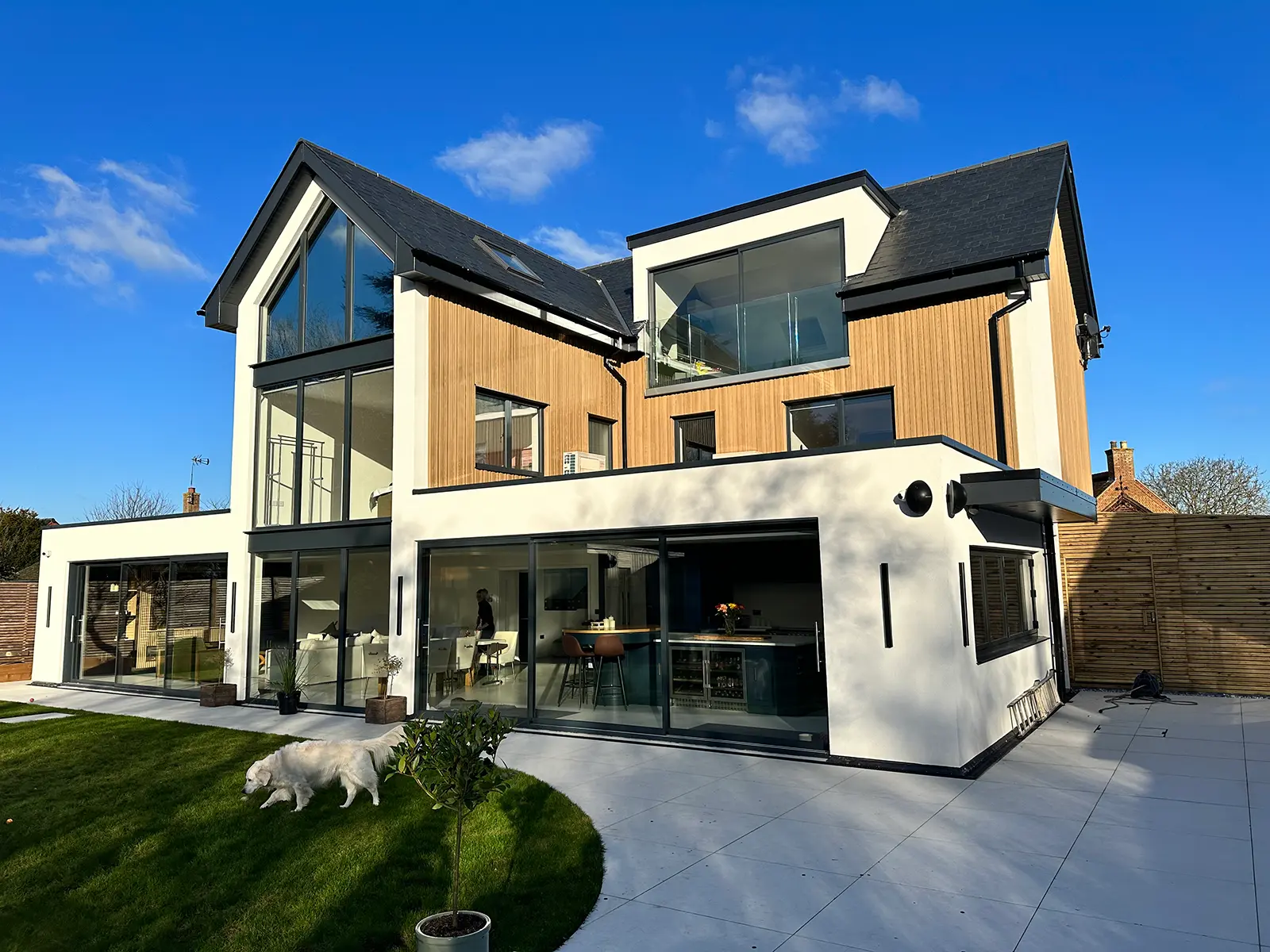
Bifold doors changed how many London homes act in summer and winter alike. When you can move an entire wall aside in one smooth motion, a terrace enters into the cooking area, a basement lightens up, and a narrow Edwardian hallway suddenly breathes. I have set up, serviced, and changed bifolds throughout boroughs from Haringey to Wandsworth for more than a years, and the exact same pattern repeats: the ideal system, well specified and effectively fitted, feels simple and easy. The wrong one creaks, snags on a frosty early morning, bleeds heat, and lets the garden in when you least desire it. The distinction lies in the details.
Where bifolds make good sense in London homes
Most of our demands come from terraced homes with rear extensions, ground flooring flats with modest outdoor patios, and garden spaces in the external districts. Bifolds reward areas where you desire a full opening and regular gain access to, not just a framed view. On a Northcote Roadway kitchen extension, a five-panel aluminium set replaced French doors and sidelights. The clear opening grew from roughly 1.6 metres to nearly 4 choosing between upvc and aluminium metres, and we dropped the threshold so the professional aluminium window solutions porcelain tiles ran flush to the deck. The clients host a weekly dinner club, so that opening matters. In a St John's Wood basement flat, we did the reverse: 3 narrow panels with higher-performance glazing to eliminate heat loss, plus an aerated trickle system because the lightwell acts like a funnel in heavy rain. The point is to create for how the area lives, not for a sales brochure photo.
Bifolds match homes that take advantage of maximum aperture and a low threshold. If the priority is the largest unbroken view with minimal vertical frames, sliding doors compete highly, particularly with contemporary slimline systems. I usually walk clients through both alternatives on website, taping out mullion positions and swing arcs. Nothing changes seeing how panels stack, where furniture sits, and how you'll utilize the gain access to leaf on a cold January evening.
Aluminium, wood, or uPVC: choosing the best frame
Aluminium dominates in London for excellent reasons. Thermally broken aluminium systems provide slender sightlines, tightness for taller panels, and long-lasting stability. With high-quality powder coating, marine-grade hardware, and proper drain, they brush off the city's rain and grime. A good aluminium bifold from a relied on glazing specialist in London will bring a U-value for the whole door set around 1.2 to 1.5 W/m TWO K, depending upon glass and spacer selection. Fine margins come from the thermal break, the gasket system, and the quality of the rolling gear.
Timber bifolds still have a location in conservation areas and for those who love the heat of a painted or stained frame. Properly engineered laminated timbers resist twist much better than old softwood. The compromise is upkeep. In Hammersmith and Fulham, I have reviewed hardwood bifolds five years after installation to re-seal the bottom rails where splash-back and leaf debris gather. You do require to remain on top of paintwork and drain channels. When a customer is set on wood, I steer them toward factory-finished crafted products with decent guarantees and breathable paints rather than site-built kits.
uPVC bifolds are less common on big openings in London. The profiles have enhanced and some systems carry out respectably, but uPVC lacks the intrinsic tightness for really high or wide panels without chunky support. On a budget, a little two or three panel uPVC bifold can work for an utility or secondary space. For primary living areas, specifically with panels approaching 2.4 to 3 metres in height, aluminium is the safer bet.
The physics behind a simple glide
Every property owner notifications the first pull: smooth, solid, no rattle. That feel comes down to a few technical choices. The track should be directly, level, and properly bedded. Anchors into the substrate have to tolerate seasonal movement without pinching the track. Rollers need to be stainless or high-grade nylon on stainless axles, matched to the panel weight. In less expensive sets, the running gear looks similar at a look, however the bearings are lower grade. After a year of metropolitan dust, they chew out. An excellent installer will set the rollers cleanly on the base track, change for stable load on each hinge, and line up the compression of the gasket so the panels close without fighting the magnetic catches.
Thermally broken aluminium systems keep the inner and outer skins separated with a polyamide barrier. That minimizes heat transfer and assists prevent condensation on the inner frame. London's winter season humidity can be penalizing. I have actually seen cheap, non-broken systems bead water on a frosty morning, drip onto engineered oak, and leave a stain line that never quite disappears. Insist on thermally broken aluminium in any main home, and examine the published U-value for the entire door set, not just centre pane glass.
Glass spec that holds its own year-round
For most bifold doors in London, double glazing with argon gas and low-E finishes does the heavy lifting. Low E glass windows reflect internal heat back into the space while admitting solar gain as needed. A soft-coat low-E on face 3 with warm-edge spacers and argon-filled units is the bread and butter of energy effective windows London property owners request. Go up to triple glazing just when the elevation is especially exposed, acoustic needs are high, or you require to hit a very low total U-value for a Passivhaus-style extension. Triple adds weight, which impacts panel size and the feel of the slide. The majority of contemporary aluminium systems handle it, however you should size the rollers properly and confirm optimal panel load.
When I work near flight courses in Hounslow or next to rail lines through Camden, I include acoustic laminated glass to the specification. A 6.8 mm acoustic laminate coupled with a 4 or 6 mm external makes a noticeable distinction, typically accomplishing Rw worths in the mid 40 dB range for the unit. Constantly balance acoustic efficiency against solar control. On south-facing elevations in Barnet or Enfield, I often integrate a low-E with a subtle solar-control tint to keep summer season gains in check. The ideal balance prevents the space feeling like a greenhouse at 3 pm in July.
Compliance and accreditation you can rely on
Any externally dealing with door set need to satisfy present Structure Regulations. For England, that includes Part L for energy efficiency, Part F for ventilation, Part K for shatterproof glass, and Part Q for security on new houses. For replacements, we self-certify through FENSA or CERTASS, and that certificate matters when you sell. I have actually been called to correct non-certified installs where a lawyer flags missing out on documentation right before exchange. It is easier and less expensive to do it right first time. Ask your installer to verify whether they are FENSA certified window installers or operating under a CERTASS plan. Both are accepted and both audit installers.
Glass efficiency is best verified through BFRC rankings, particularly when you are stabilizing solar gain versus heat loss. bfrc ranked glazing providers publish whole-window performance. For custom aluminium doors London tasks, a credible fabricator can run your specific setup through their system's BFRC simulations instead of pricing estimate a generic centre-pane figure.
Security ought to not be an afterthought. Multi-point locking, anti-lift pins, and PAS 24 checked hardware are basic on better systems. In boroughs like Hackney and Southwark, clients significantly request for laminated inner panes, which resist opportunistic attacks. It adds modest expense and weight, and it buys peace of mind.
Thresholds, drainage, and the truths of London weather
A flush threshold looks outstanding, but water follows gravity, not Instagram. In a Teddington extension, the client desired one smooth plane from kitchen area to decking. We accomplished a 15 mm upstand with concealed slots that drained into a direct gully and after that a soakaway developed to regional authority guidance. The key is stepping the water line outside the weather condition seal. Bifolds use several brush and bulb gaskets. When wind drives rain throughout the patio area, some wetness constantly finds its way into the external chamber of the track. The system should evacuate it. That implies clear drain holes, a fall to the outdoors, and absolutely nothing blocking weep courses. No installer must silicone every visible gap closed, appealing as it searches the day.
Exposed websites in Greenwich and along the Thames get lashings of wind-driven rain. On those jobs, I frequently raise the external completed floor level a touch listed below the inner, even if we keep a low threshold, and include a discrete slot drain. It is a little compromise that prevents damp patches sneaking under timber floors.
Comparing bifolds, sliders, and French doors without the hype
Each door type solves a different issue. Bifolds offer you the largest walk-through for a given opening and make smaller sized gardens feel like an additional space. Moving doors London customers choose when they want continuous glass and less verticals. Two-panel sliders with sightlines of 20 to 30 mm at the conference stile are difficult to beat for a panoramic view across a long garden in Chiswick. On the other hand, if you have a 3 metre opening and plan to open it completely most weekends, bifolds provide the experience you want.
French doors London property owners still specify for duration residential or commercial properties and tighter openings, normally 1.2 to 1.8 metres wide, where proportion matters and the building's heritage requires it. The throw of the leaves fits a patio that is not crowded with furniture. For new extensions, a French set coupled with side windows is seldom as practical as a bifold or slider.
Sizing and panel planning that prevent sorrow later
Panel width identifies how the doors feel. Go broader, and you have fewer verticals however much heavier leaves. Go narrower, and you may end up with too many breaks in the view. A lot of aluminium bifolds are happiest with panels between 800 and 1000 mm wide, peaking near 1200 mm for some systems. Heights of 2200 to 2600 mm are common in London extensions. On really high sets nearing 3 metres, I define strengthened stiles and heavier bottom rollers. If you desire a gain access to leaf, keep one panel hinged on the jamb so you can use it like a standard door for daily ins and outs. Center-opening setups look neat but make complex daily usage unless you are comfy opening 2 panels for a fast step outside.
When possible, I stack the panels outside. It keeps valuable interior area clear and avoids the stack from nibbling into your dining location. In some flats, planning conditions or sound call for internal stacking to prevent clatter in the night. That is great, however stroll through the furnishings plan with masking tape on the flooring before you sign off.
Energy performance, U-values, and real bills
We see a lot of inflated claims. Constantly distinguish between centre-pane U-values and whole-door U-values. The whole-door figure includes the frame, spacer, and the impact of gaskets and hardware. With double glazing, a reasonable whole-door U-value sits between 1.2 and 1.5 W/m ² K for well defined thermally broken aluminium windows and doors. Triple glazing can push the door set listed below 1.0 W/m TWO K, but you pay in weight, expense, and often thicker frames.
Energy efficiency in windows and doors is not practically U-values. Solar gain can work for or against you. In a north-facing rear extension in Islington, a basic low-E with argon gas double glazing was perfect. In a south-west facing garden space in Ealing, we dialed back the solar gain to prevent overheating. Add trickle ventilation where Part F needs it, however regard the envelope. I choose controllable trickles incorporated into the head or adjacent side lights and, if possible, whole-house ventilation that takes the load off the doors entirely.
Hardware, finishes, and a London palette
Powder coat colours from stock RALs like 7016 anthracite or 9005 black stay popular. In preservation fringes of Richmond, softer greys and off-whites calm the elevation. For seaside direct exposure along the Thames estuary or residential or commercial properties that back onto the river, marine-grade powder covering and stainless repairings are worth the little uplift. Manages see the most action. Pick hardware that feels durable in the hand, with positive engagement on closure. If the detent feels unclear at survey, it will feel careless in 2 years.
Security cylinders ought to be 3-star or 1-star with 2-star handles to fulfill TS 007. Hinge guards and anti-lift devices must be basic. When you engage a London doors and window company with a track record to safeguard, these aspects are baked into the bundle rather than add-ons.
Installation requirements and why they matter more than brand badges
Even the best double glazing suppliers are at the mercy of the installer on the day. I have actually replaced premium bifolds that stopped working for banal reasons: a bowed steel, no packers under the mullions, a blocked weep, or silicone bridging the thermal break. An appropriate study gets flooring falls, steel deflection, and tolerance for plaster returns. If the lintel or goalpost frame supporting a big opening is under-specified, doors head out of square when the brand-new roof loads up. We often coordinate with structural engineers and the contractor to make sure the head stays stable within a couple of millimetres throughout the span.
Choose trusted glazing experts London house owners really advise. References from recent tasks in your district count for more than glossy sales brochures. FENSA or CERTASS subscription is table stakes. Examine whether the producer is local. Many custom window makers London based operate their own workshops around Park Royal, Enfield, or Croydon, which assists with service calls and glass replacements. A bfrc ranked glazing provider with internal manufacturing control is much easier to hold to account than a remote middleman.
Realistic budget plans and the expense curve
Prices differ by system, size, glass, and surface. For aluminium bifold doors London projects, a 3 to four panel set around 3 to 3.5 metres large, powder coated in a basic RAL, with low-E, argon-filled double glazing and warm-edge spacers, usually lands in between ₤ 4,500 and ₤ 8,500 including barrel and FENSA registration. Taller panels, triple glazing, unique colours, integral blinds, acoustic laminates, and marine-grade hardware push costs up. A slimline slider of comparable width can cost approximately the exact same or somewhat more depending upon the system. Timber sits at a premium when factory finished and appropriately engineered. uPVC is the spending plan option however typically with compromises in span and aesthetics.
Lead times run 3 to 8 weeks from study with a lot of double glazed systems maker London fabricators, longer throughout spring. If you are coordinating with an extension develop, lock the opening size early and brace for a clean survey before plastering. Absolutely nothing ruins a schedule quicker than a late modification of opening dimensions.
Working with suppliers and installers in the capital
There are many doors and windows providers London large, from small independents in Battersea to bigger double glazing companies London runs in trading estates out of the North Circular. The very best double glazing suppliers are transparent about system origin, hardware brands, and BFRC scores. You want clearness on service warranty terms: 10 years on frames and sealed systems is standard, with 1 to 2 years on hardware and finishes. Ask about service call response times. A bifold that will not lock at 9 pm in winter season is not a theoretical problem.
When assessing trusted double glazing suppliers, bring a short brief: opening size, wanted panel count, target U-value, any security requirements, and your choice for within or outside stacking. Reliable doors and windows suppliers will go over thermally broken aluminium windows versus uPVC doors and windows without forcing their stock line. For jobs needing custom aluminium doors London architects commission, I typically communicate straight with the fabricator to confirm support, head load, and drip detail. That partnership saves therapeutic work later.
Practical circumstances from jobs throughout London
A young household in Walthamstow desired cost effective double glazing London costs might support without a bargain-basement outcome. We defined a four-panel aluminium bifold at 3.6 metres with standard low-E, argon double glazing, warm-edge spacers, and a mid-grey powder coat. The gain access to leaf sat to the right with outside stacking. We included a low slot drain throughout the outdoor patio edge. The final whole-door U-value came in around 1.4 W/m TWO K. Overall cost was just under ₤ 7,000. Three years on, 2 service calls: one for a weatherstrip replacement after a pet dog chewed it, one for a light roller modification after the timber deck settled. Both sorted within a week.
A riverside flat in Shad Thames required moving doors London regulations would accept for wind load and acoustic control. We went with a twin-track slider, 2.7 metres high, laminated acoustic inner pane, and solar control outer. On hot days, the space remains comfy without blinds down. The client at first desired bifolds, once we taped out the panel stack inside their tight living-room, a slider made more sense.
In a Victorian semi in Lewisham, the rear elevation dealt with west, catching serious afternoon sun. The owners chose thermally broken aluminium windows for the remainder of the extension and an aluminium bifold with a subtle solar-control low-E. They had actually thought about triple glazing, however the extra weight would have required a thicker bottom rail. We attained their target energy efficiency while keeping a slim profile. Part Q security upgrades cleared building control on the first pass.
Sustainability and lifecycle thinking
Sustainable glazing London conversations go beyond recycled content. Aluminium has a high embodied energy however a long service life and is fully recyclable. A resilient system that runs efficiently for 25 to 40 years is better than a less expensive door that requires replacing in a decade. Low-E coatings, argon gas double glazing, and warm-edge spacers lower functional energy usage, which is where the big carbon wins live. Great air tightness, clever limit detailing, and systematic drain help the door carry out as planned. Combine the bifold with shading and ventilation methods and you can cut cooling loads even throughout heatwaves.
For business glazing providers London utilizes on café extensions and studio spaces, bifolds provide flexible frontages. Aluminium systems rated for regular biking and heavier daily use are the best choice. They cost more, however hardware designed for industrial duty repays in fewer callouts and less down time.
Maintenance that protects performance
I schedule customers for a first service within six to twelve months. A brand-new develop settles, decks move, and tracks gather dust. A light tweak of the rollers, a tidy of the drainage channels, and a dab of silicone-friendly lube on gaskets and moving parts keeps whatever sweet. Property owners can handle the essentials. Vacuum the track monthly, keep the weep holes clear, and wash frames with moderate soapy water. Avoid solvent cleaners that can attack gaskets and powder coat. If a leaf begins to catch, do not require it. A millimetre of lift on a roller is normally the fix.
When a bifold is not the best answer
Bifolds are not a cure-all. If your opening looks onto a narrow alley or you seldom open more than a single door, a well designed French set or a slim slider might deliver much better value. In very exposed coastal-like microclimates along the Thames, sliders manage wind pressure better and have less gaskets to preserve. If security concerns control, a slider with laminated glass and a robust interlock can be partially tougher versus attack. I always encourage clients to choose based upon daily patterns rather than the a couple of days a year you host a garden party.
A short, useful checklist before you sign
- Confirm whole-door U-value and BFRC score for your exact configuration. Verify FENSA or CERTASS registration and ask for local recommendations in your borough. Agree panel count, access leaf position, and inside vs outside stacking with a taped flooring plan. Detail threshold and drain with illustrations, not verbal promises. Get warranties in writing: frames, glass, hardware, finishes, and service action times.
Bringing it together on your project
Whether you are planning a modest rear opening in Harrow or a full-width extension in Kensington, the concepts stay the exact same. Match the door type to the method you live, choose thermally broken aluminium doors and windows where performance and scale demand it, and work with a supplier who can show BFRC data and FENSA or CERTASS credentials. For bespoke scenarios, made to determine windows London fabricators produce every day can be tailored without reinventing the wheel. When done effectively, a bifold does more than open a wall. It changes how a home feels from breakfast to sunset.
If you want a consultation on a quote, send out the drawing, U-value details, glass specification, and hardware list. I can generally tell in a couple of minutes whether a system is properly crafted, whether the price shows the quality, and if there is a smarter method to deal with thresholds, security, or ventilation. Great glazing is not guesswork. It takes care positioning of products, requirements, and the method Londoners in fact use their homes.